Is Cross-Border Psychiatric Care Safe? How to Verify a Mexican Doctor's Credentials
Cross-Border Care · Patient Safety
Is Cross-Border Psychiatric Care Safe? How to Verify a Mexican Doctor's Credentials
Every licensed doctor in Mexico is searchable in a free government registry. Here's exactly how to use it — including on me.
Cross-border psychiatric care is as safe as the doctor you choose — and in Mexico, you can verify any doctor's license in about five minutes, for free. Every legally practicing physician in Mexico holds a government-issued license (cédula profesional) recorded in a public national registry run by the Secretariat of Public Education (SEP). Specialists like psychiatrists must hold a second, specialty-specific license, and board certification adds a third, voluntary layer of vetting.
An estimated 1.2 million Americans a year traveled to Mexico for medical care before the pandemic, and the number has been climbing back since. Most of them never check a single credential — not because it's hard, but because nobody shows them how.
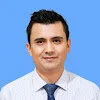
I'm Dr. Ernesto Cedillo, a board-certified psychiatrist in Tijuana treating patients from San Diego County. In this article I'll show you exactly how Mexico licenses its doctors, how to verify anyone's credentials in the official registry — and then I'll hand you my own license numbers so you can practice on me.
Section 01
The Honest Answer About Safety
Let me say the uncomfortable part out loud: there are excellent doctors in Mexico and there are bad ones — exactly like in the United States. The question "is care in Mexico safe?" has no useful answer, because safety doesn't live at the country level. It lives at the level of the individual doctor, their training, and their accountability.
What Mexico does have — and most patients don't know this — is a fully public, government-run license registry. In the US, you'd check a state medical board. In Mexico, there's one national database for every licensed professional in the country, searchable by anyone, from any device, for free.
So the real question isn't "is Mexico safe?" It's "have you verified this specific doctor?" — and after reading this article, you'll be able to answer that in five minutes.
What I see in practice
In years of treating San Diego patients, I can count on one hand the ones who checked my licenses before their first visit. I wish it were all of them. A patient who verifies credentials isn't being distrustful — they're being a good patient, and every legitimate doctor in Mexico should welcome it.
Section 02
How Mexico Licenses Doctors: The Three Layers
A legitimate Mexican specialist carries three distinct layers of credentials. Understanding them takes two minutes and instantly makes you a harder patient to fool:
1. Cédula profesional — the medical license
Issued by the federal government (Secretariat of Public Education, SEP) after completing medical school. It carries a unique number, functions as a license to practice (efectos de patente), and is recorded in the public national registry. No cédula, no legal practice — period.
2. Cédula de especialidad — the specialty license
A second, separate license issued only after completing an accredited residency — in psychiatry, that's four additional years of hospital training. This is the layer most patients never check: someone can hold a general medical cédula and still have zero specialist training. Always verify both.
3. Board certification — the voluntary gold standard
Each specialty has a national board (consejo) — for psychiatry, the Consejo Mexicano de Psiquiatría — operating under CONACEM, the national committee that regulates specialty boards. Certification requires passing board exams and periodic recertification. It's the closest equivalent to US board certification.
Section 03
How to Verify Any Mexican Doctor in 5 Steps
You don't need Spanish, an account, or a peso. Here's the full process:
- Get the doctor's license numbers. A legitimate doctor publishes both cédula numbers — general and specialty — on their website, prescriptions, and office signage. If you have to ask, that's fine; if they hesitate to give them, walk away.
- Open the official registry: the Registro Nacional de Profesionistas at cedulaprofesional.sep.gob.mx — the SEP's national database and the only official source. (Ignore lookalike third-party sites.)
- Search by cédula number or full name. Number is more precise. The result shows the professional's name, degree, issuing university, and year — for each license they hold.
- Check that the specialty matches the claim. The specialty cédula should say the specialty they advertise — for a psychiatrist, "Psiquiatría" — issued through an accredited university and hospital residency. A general medical cédula alone does not make anyone a specialist.
- Verify board certification separately. Ask the doctor which consejo certifies them (in psychiatry, the Consejo Mexicano de Psiquiatría) and check the specialty board or CONACEM's directory of certified specialists. Since late 2025, the SEP also issues a QR-verifiable digital credential summary (Constancia de Situación Profesional) that doctors can share directly.
Total time: about five minutes. Total cost: nothing. There is no equivalent excuse for skipping it.
Want my license numbers to try it yourself?
They're in Section 06 below — and printed on everything I sign.
Send me a WhatsAppSection 04
Beyond the License: Green Flags and Red Flags
A valid license is the floor, not the ceiling. Once the credentials check out, here's what separates a practice you can trust from one you can't:
Green flags
- License numbers published openly — on the website, on prescriptions, on the office wall.
- Board certification they can name — and that you can confirm with the consejo.
- A physical office in an established medical building, with a verifiable address.
- Transparent, published prices — no "it depends, come in first."
- Written records: you leave with documentation of your diagnosis and plan, and can get a superbill or records in English on request.
- Answers questions before you book — a doctor with nothing to hide doesn't dodge.
Red flags
- No license numbers anywhere, or excuses when you ask for them.
- Diagnosis and prescription promised in minutes, with no structured evaluation.
- Pressure tactics: today-only prices, "book now or lose the spot."
- No physical address, cash-only with no receipt, no records offered.
- Claims that sound engineered for tourists rather than patients — "any medication, no questions asked."
Worth repeating
The bad actors in border medicine survive on patients who don't check. Every verification you run — five minutes, zero dollars — makes you a patient they can't work with. That's the entire point.
Section 05
What's Different About Psychiatry Specifically
Psychiatric care isn't a one-time procedure like a dental crown. It's a relationship with follow-up, medication adjustments, and continuity — which means cross-border psychiatry has to be structured properly to be safe. A legitimate setup looks like this:
- A real evaluation, not a transaction. A first psychiatric visit should be a full structured assessment — for ADHD, for example, that means validated scales and a childhood history, as I explain in my guide to how adult ADHD testing works.
- Medication managed on the Mexican side. US law tightly restricts bringing controlled substances across the border — so prescriptions are written and filled in Mexico, with scheduled follow-ups. Any provider who suggests otherwise is a red flag; the legal details are covered in my adult ADHD diagnosis and treatment guide.
- Records that travel with you. You should be able to get your diagnosis, treatment plan, and visit summaries in English — so your US primary care doctor stays in the loop, and so you're never locked in.
- A plan for emergencies. A responsible cross-border psychiatrist tells you clearly: mental health crises are handled by emergency services where you are, not across a border. Ongoing care and crisis care are different systems.
What I see in practice
My San Diego patients don't cross the border because Mexican psychiatry is exotic — they cross because a structured 60-minute evaluation with a board-certified specialist, at a transparent cash price, within two weeks, is simply hard to find at home. The border is logistics. The medicine is the same evidence base on both sides.
Section 06
Verify Me: A Worked Example
Fair is fair. You've read the method — now run it on me. Here is everything you need:
5 min
Is all it takes to verify any Mexican doctor's licenses
$0
The official SEP registry is public and completely free
1.2M
Americans a year sought medical care in Mexico pre-pandemic
My credentials — check them yourself
- Full name: B. Ernesto Cedillo Ramírez
- Medical license (Céd. Prof.): 11206254 — Médico Cirujano, UNAM
- Specialty license (Céd. Esp.): 13577158 — Psiquiatría, UNAM, residency at Hospital Psiquiátrico Fray Bernardino Álvarez
- Board certification: Consejo Mexicano de Psiquiatría
- Where to check: search either number at cedulaprofesional.sep.gob.mx — it takes less time than reading this section.
Checked the registry and want to talk?
English-speaking psychiatric care, 10 minutes from San Ysidro.
Send me a WhatsAppSection 07
Frequently Asked Questions
Is it safe to see a psychiatrist in Tijuana?
It's as safe as the psychiatrist you choose. Mexico licenses doctors through a federal system with a public registry, and specialists carry a separate specialty license plus optional board certification. Verify those three layers before booking — with any doctor, anywhere — and you remove most of the risk.
How do I verify a Mexican doctor's license?
Search the doctor's name or cédula number in the Registro Nacional de Profesionistas at cedulaprofesional.sep.gob.mx — the official, free, public database run by Mexico's Secretariat of Public Education. Check both the general medical license and the specialty license.
What is a cédula profesional?
It's the government-issued professional license every legally practicing doctor in Mexico must hold, identified by a unique number and recorded in the national registry. Specialists hold an additional cédula de especialidad issued only after completing an accredited residency.
Does Mexico have board certification like the US?
Yes. Each medical specialty has a national board (consejo) operating under CONACEM, the national committee for specialty certification. In psychiatry it's the Consejo Mexicano de Psiquiatría, which requires board examinations and periodic recertification — functionally equivalent to US board certification.
What are the biggest red flags when choosing a doctor in Mexico?
No published license numbers, diagnosis-and-prescription promised in minutes, pressure tactics, no physical office address, and no written records. Any one of these is reason enough to keep looking.
Are Dr. Cedillo's credentials publicly verifiable?
Yes. His medical license (11206254) and psychiatry specialty license (13577158), both from UNAM, are searchable in the SEP's national registry, and he is certified by the Consejo Mexicano de Psiquiatría. The numbers appear on his website, prescriptions, and office documents.
Section 08
The Bottom Line
Cross-border care isn't inherently risky or inherently safe — it's exactly as trustworthy as the doctor at the other end of it. Mexico gives you the tools to know: a public federal registry, a two-license system for specialists, and national board certification. Five minutes of checking beats months of wondering.
If you're considering psychiatric care in Tijuana — for an adult ADHD evaluation, anxiety, depression, or a second opinion — verify me first, then message me. That's the right order.
Verified and ready to talk?
Board-certified psychiatrist · structured, evidence-based care in English or Spanish · 10 minutes from San Ysidro.
First visit $125 USD · follow-ups $100 · superbill provided · HSA/FSA eligible
Book a first visitAbout the Author
Dr. B. Ernesto Cedillo Ramírez, MD is a board-certified psychiatrist trained at the Universidad Nacional Autónoma de México (UNAM), with residency at Hospital Psiquiátrico Fray Bernardino Álvarez. He is certified by the Mexican Board of Psychiatry (Consejo Mexicano de Psiquiatría).
From his practice at New City Medical Plaza in Zona Río, Tijuana — 10 minutes from the San Ysidro border crossing — he treats adults with ADHD, anxiety, depression, and other mood disorders, with particular experience serving English-speaking, cross-border patients from San Diego County.
Credentials & contact:
Professional License (Céd. Prof.): 11206254 · Specialty License (Céd. Esp.): 13577158
New City Medical Plaza, P.º del Centenario 9580, Floor 25, Office 24, Zona Río, 22010 Tijuana, B.C., Mexico
Phone/WhatsApp: +52 664-484-2218
Email: dr.ernesto@doctorpsiquiatra.com
Instagram: @dr.ernesto.cedillo
References
[1] Secretaría de Educación Pública (SEP), Dirección General de Profesiones. Registro Nacional de Profesionistas. cedulaprofesional.sep.gob.mx — the official public license registry.
[2] Comité Normativo Nacional de Consejos de Especialidades Médicas (CONACEM) — regulatory body for medical specialty boards in Mexico, including the Consejo Mexicano de Psiquiatría.
[3] Patients Beyond Borders / NPR — estimates of approximately 1.2 million US residents traveling to Mexico annually for medical care before the pandemic, with numbers recovering since.
[4] Centers for Disease Control and Prevention (CDC). Medical Tourism: Travel to Another Country for Medical Care — general guidance on verifying providers and planning care abroad. wwwnc.cdc.gov